Pattern #1: Remove Coupon Fields
Pattern #1 Tested 10 timesFirst tested by  Herman Klein Recently tested by
  Joachim Furuseth on Mar 24, 2026
With A Total Of 2.5 Evidence For Version B It Is Likely Better
Measured by the sum of negative and positive tests.
Expected Median Effects Of B
6%
Progression
(1 tests)
-
Leads
-
Signups
-
Engagement
0.8%
Sales
(9 tests)
15%
Revenue
(2 tests)
-
Retention
-
Referrals
1.2%
ANY PRIMARY
(10 tests)
All 9 tests meta-analyzed: combined effect (p-val 0.1335)
84.6% of 90% cumulative power target at 1% MDE from 9 tests Help replicate this with an A/B test
Tested on
Tests
Sorted by:
Pattern #1: Remove Coupon Fields
Was Tested
On Obsbygg.no
by
Joachim Furuseth
Test #
635
on
Obsbygg.no
by Joachim Furuseth
Feb 18, 2026
Meta
Test link
Variation B Was Likely Better
-
Measured by completed transactions | p-val 0.2258
- A: 45.4% (6258 successes out of 13797 visitors)
- B: 46.1% (6260 successes out of 13583 visitors)


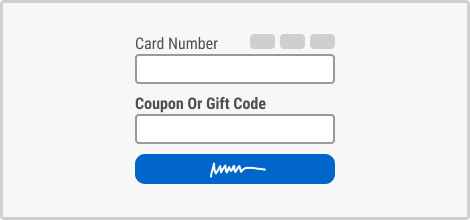
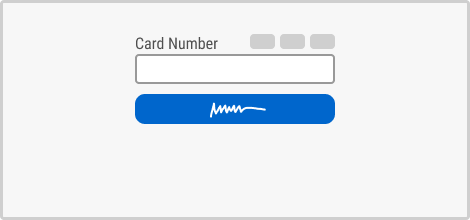
The control had a clickable link "Use discount code" which would reveal an input field for a coupon code. The variation removed this link and input field. Impact on purchases was measured. (Desktop only)
Test #
640
on
Obs.no
by Joachim Furuseth
Mar 24, 2026
Meta
Test link
Variation B Was Insignificant
-
Measured by compl | p-val 0.6799
- A: 50.9% (10463 successes out of 20568 visitors)
- B: 51.1% (10513 successes out of 20584 visitors)


The control had a clickable link "Use discount code" which would reveal an input field for a coupon code. The variation removed this link and input field. Impact on purchases was measured. (Desktop only)
Test #
639
on
Obs.no
by Joachim Furuseth
Mar 23, 2026
Meta
Test link
Variation B Was Insignificant
-
Measured by completed transactions | p-val 0.3999
- A: 45.9% (43145 successes out of 93901 visitors)
- B: 46.1% (43201 successes out of 93628 visitors)


The control had a clickable link "Use discount code" which would reveal an input field for a coupon code. The variation removed this link and input field. Impact on purchases was measured. (Mobile only)
Test #
634
on
Obsbygg.no
by Joachim Furuseth
Feb 18, 2026
Meta
Test link
Variation B Was Insignificant
-
Measured by completed transactions | p-val 0.8891
- A: 42.4% (14086 successes out of 33194 visitors)
- B: 42.5% (14173 successes out of 33357 visitors)


The control had a clickable link "Use discount code" which would reveal an input field for a coupon code. The variation removed this link and input field. Impact on purchases was measured. (Mobile only)
Test #
393
on
Snocks.com
by  Melina Hess
Jan 19, 2022
Meta
Test link
Melina Hess
Jan 19, 2022
Meta
Test link
Variation B Was Likely Worse
-
Measured by completed transactions | p-val 0.0691
- A: 59.4% (9922 successes out of 16712 visitors)
- B: 58.4% (9847 successes out of 16863 visitors)


This experiment replaced a visible coupon field with a dynamic text link that would initially hide the form field. Only after clicking the text link would the coupon form field appear. The translation from German is "Do you have a coupon code? Click here to apply". Impact on completed transactions was measured.
Test #
389
on
Svsound.com
by  Keenan Davis
Dec 16, 2021
Meta
Test link
Keenan Davis
Dec 16, 2021
Meta
Test link
Variation B Was Insignificant
-
Measured by total revenue | p-val 0.0870
-
Measured by completed sales | p-val 0.2878
- A: 17.3% (1761 successes out of 10188 visitors)
- B: 17.9% (1809 successes out of 10133 visitors)


In this simple experiment, a highly visible coupon field was replaced with a less visible (but clickable) link in the variation. Clicking on the link would show the coupon field. Impact on sales and revenue was measured.

Variation B Was Insignificant
-
Measured by completed transactions | p-val 0.6155
- A: 80.9% (1590 successes out of 1965 visitors)
- B: 81.5% (1538 successes out of 1886 visitors)


In this experiment, a fully visible coupon field (A) was made less visible by turning it into a default collaped link (B). Clicking on the link caused the coupon field to appear.
Test #
145
on
Normanrecords.co...
by  Nathon Raine
Jan 18, 2018
Meta
Test link
Nathon Raine
Jan 18, 2018
Meta
Test link
Variation B Was Likely Better
-
Measured by completed sales | p-val 0.2076
- A: 72.0% (1502 successes out of 2086 visitors)
- B: 73.7% (1514 successes out of 2053 visitors)


In this test the coupon field was replaced with a small link that would bring the field back if needed. This is a more suble approach than just completely removing the coupon field. It still allows for the use of coupon fields by those customers which are truly searching for a way to enter their aquired codes.
Test #
42
on
Adoramapix.com
by Herman Klein
May 11, 2016
Meta
Test link
Variation B Was Better
-
Measured by visits to shopping cart | p-val < 0.0001
-
Measured by post-purchase page visits | p-val 0.0128
- A: 72.8% (5576 successes out of 7655 visitors)
- A: 70.1% (5365 successes out of 7655 visitors)
- B: 77.2% (6072 successes out of 7861 visitors)
- B: 71.9% (5652 successes out of 7861 visitors)


Source: vwo.com/blog/promo-code-box-ecommerce-website-bleeding-dollars-ab-test/
VWO.com published this test which removed two coupon fields on a shopping cart: a gift card code and a special offer code.
For each pattern, we measure three key data points derived from related tests:
REPEATABILITY - this is a measure of how often a given pattern has generated a positive or negative effect. The higher this number, the more likely the pattern will continue to repeat.
SHALLOW MEDIAN - this is a median effect measured with low intent actions such as initiating the first step of a lengthier process
DEEP MEDIAN - this is derived from the highest intent metrics that we have for a given test such as fully completed signups or sales.